

What is Nutrigenomics?
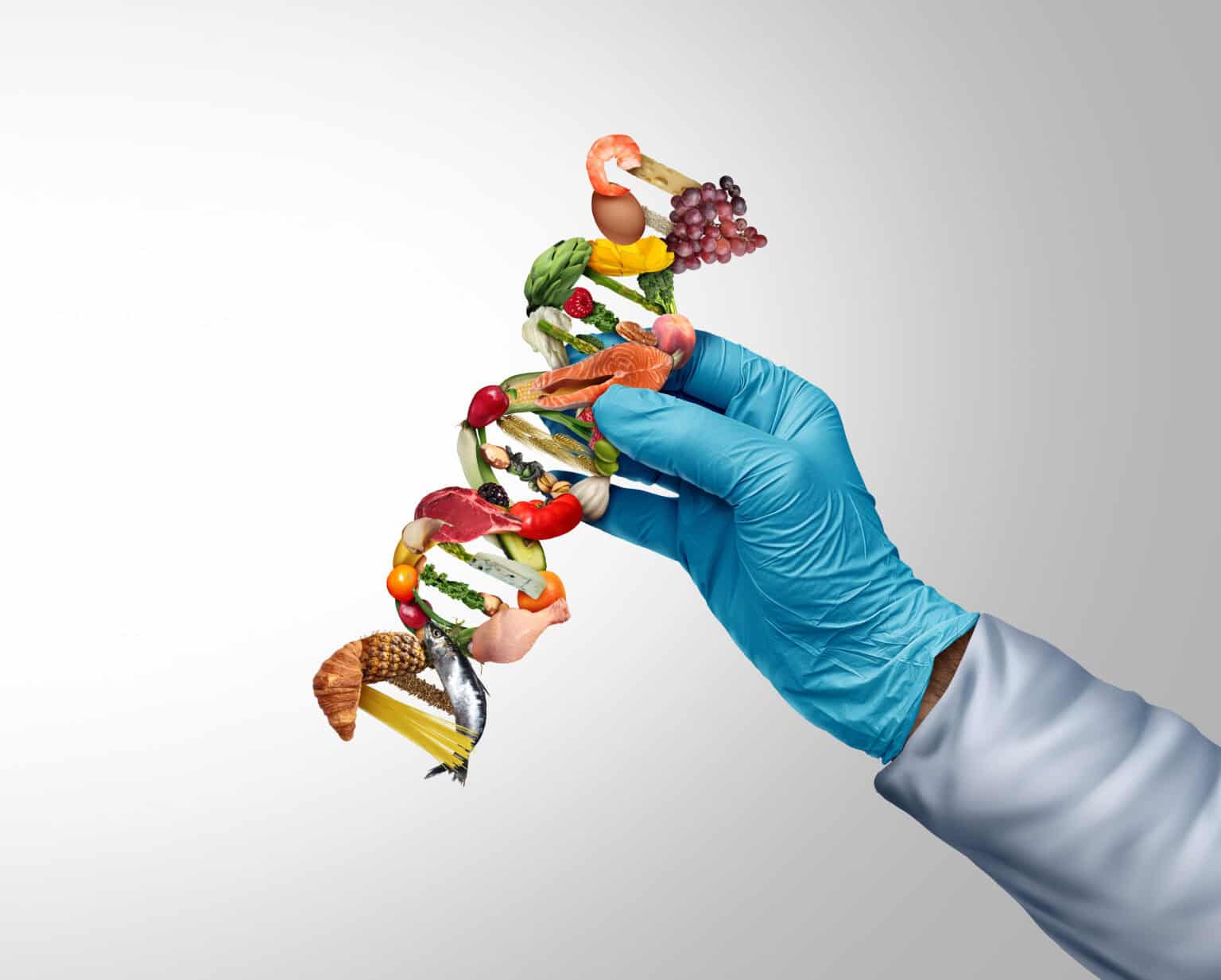
Since the launch of the human genome project in the 1990s, gene-based science has come a long way and is now used in an increasing number of scientific research fields. These include medicine, biotechnology, forensics, agriculture and pharmaceutical research. Genomics is a developing field that looks at genes, the compounds produced by genes, and how these interact with physiological and biological pathways. Nutrigenomics investigates specifically the interactions between genes, diet and nutrients and the outcomes of these interactions.
How our genes influence our characteristics, such as body shape and height, hair colour and eye colour, is known as our phenotype. However, we now know that many genes are impacted by environmental factors, such as nutrient levels, which are variable throughout our lives. We know that there are key nutrients that influence gene activity without actually changing the genetic code. These interactions between genes and the environment are known as epigenetics.
One well-known example involves key nutrients such as B vitamins, choline and retinol, which are critical in producing specific compounds necessary to activate certain genes that activate genes, and this is called methylation (1). A genetic variant can inhibit or activate these pathways. An example might be that a deficiency in a nutrient could result in altered genetic expression (2). Nutrigenomics testing aims to isolate specific genetic variants that can impact on or be impacted by nutrients. The interactions can involve the metabolism of certain nutrients, which pathways they will be directed along, how they are transported in and around the body or cells, and the level of effect they may have.
A genetic variant is a single variation in the genetic code that differs from another person. One example might be when an individual cannot process the nutrient folate to the active form necessary for other biological processes. As a result, at normal dietary levels, the pathways that require folate are inhibited due to this genetic difference (3). Further down the line, other processes dependent on the folate are also impacted. The variant doesn’t determine that this will happen, only that it could happen.
The Nervous System Report
The Nervous System report by Lifecode Gx is a nutrigenomic report testing for specific variants related to the production and transmission of messages within the nervous system. These genes may be related to the production or metabolism of serotonin, a hormone that influences mood, memory, appetite, bowel function and cardiovascular function (4). An example of one pathway looks at the various steps between eating protein, synthesising serotonin, and the cells responding to it, which are nutrient-dependent. Knowing if you have a genetic variant at different stages during these different steps could help to understand better where dietary changes or supplements might be most effective.
Having these variants doesn’t necessarily mean that our genes are responsible for any associated symptoms. However, knowing the presence of the genetic variant makes it possible to test nutrient levels to assess possible deficiencies. Dietary changes can also gently tweak levels of the nutrients available and symptoms noted to determine whether these changes are effective.
I have completed professional training with Lifecode Gx, which has provided me with a deeper insight into my client’s nervous system genetic test results. This provides me with a level of understanding of how nutrients may be impacting their health and how to provide personalised interventions that could be even more effective. The test looks for genetic variants that can impact neurotransmitters such as serotonin, dopamine, melatonin, adrenaline and GABA. These variants can be related to low mood or depression, lack of motivation, inability to concentrate and obsessive behaviour. Whether a test is combined with blood test results or as a stand-alone investigation, these tests are genuinely personalised nutrition.
If you would like to find out more and discuss with me how nutrigenomics might benefit your book your free discovery call here: https://www.firstlightnutrition.co.uk/nutritional-therapy/
- Mentch SJ, Locasale JW. One Carbon Metabolism and Epigenetics: Understanding the Specificity. Ann N Y Acad Sci [Internet]. 2015 Jan 1 [cited 2025 Feb 10];1363(1):91. Available from: https://pmc.ncbi.nlm.nih.gov/articles/PMC4801744/
- Dhuli K, Medori MC, Bonetti G, Donato K, Cristoni S, Miertus S, et al. Nutrigenomics: SNPs correlated to minerals’ deficiencies. Clin Ter [Internet]. 2023 Nov 1 [cited 2025 Feb 10];174(Suppl 2(6)):193–9. Available from: https://pubmed.ncbi.nlm.nih.gov/37994764/
- Bekdash RA. Epigenetics, Nutrition, and the Brain: Improving Mental Health through Diet. Int J Mol Sci 2024, Vol 25, Page 4036 [Internet]. 2024 Apr 4 [cited 2025 Feb 10];25(7):4036. Available from: https://www.mdpi.com/1422-0067/25/7/4036/htm
- Sung H, Vaziri A, Wilinski D, Woerner RKR, Freddolino PL, Dus M. Nutrigenomic regulation of sensory plasticity. Elife [Internet]. 2023 Mar 23 [cited 2025 Feb 10];12:e83979. Available from: https://pmc.ncbi.nlm.nih.gov/articles/PMC10036121/